Key Takeaways
Effective workplace feedback focuses on observable behaviours, clear expectations, and practical next steps rather than personal judgement.
- Small, timely conversations are more likely to improve performance than waiting for formal reviews or annual appraisals.
- Giving and receiving input are complementary skills that strengthen trust, accountability, and collaboration when practised consistently.
- Leadership behaviours and everyday team habits determine whether honest dialogue becomes part of organisational culture.
Few professional skills are as misunderstood as feedback. Many people hear the word and immediately think of criticism, expecting a discussion about what went wrong rather than an opportunity to improve. Most people have experienced feedback delivered carelessly, framed as judgement rather than guidance, and those experiences can shape how future conversations are approached.
High-performing teams take a different view. Rather than avoiding feedback, they recognise it as an essential part of working well with others. When approached with clarity and respect, constructive feedback becomes a practical tool for helping individuals and teams perform at their best.
What Is Constructive Feedback?
Constructive feedback is information shared to help someone improve by focusing on observable behaviour rather than personal opinion. Unlike criticism that simply points out faults, it provides clear direction that supports learning, development, and future performance.
Constructive Feedback
Effective constructive feedback is respectful, specific, and future-focused. It concentrates on what someone did rather than who they are, giving the recipient practical guidance they can act on. These qualities work together. Remove any one of them, and the message becomes less useful.
Destructive Criticism
Destructive criticism shifts attention from actions to the individual. It often relies on vague impressions instead of clear observations, carrying an emotional charge that encourages defensiveness rather than reflection.
When people feel judged instead of informed, their attention naturally turns to self-protection rather than learning. Keeping comments anchored to observable behaviour helps maintain openness and makes meaningful improvement more likely.
What Makes Feedback Constructive?
Not every piece of feedback leads to meaningful improvement. In practice, the most effective feedback tends to share four characteristics that make it easier to understand, accept, and apply.
| Characteristic | Why It Matters |
| Specific | Removes ambiguity and gives clear direction. |
| Timely | Makes improvement easier while events are still fresh. |
| Behaviour-focused | Encourages discussion instead of defensiveness. |
| Actionable | Gives people practical next steps. |
These characteristics work together. Even well-intentioned feedback is less likely to make a difference if it is vague, delayed, personal, or leaves the recipient unsure of what to do next.
The Importance of Constructive Feedback in the Workplace
Constructive feedback does more than improve individual performance. Used consistently, it strengthens open communication, builds trust, and creates greater accountability across a team. Over time, these everyday exchanges shape how people collaborate, solve problems, and learn from experience together.
People rarely resist feedback itself. More often, they resist feedback that feels unfair, unclear, unexpected, or delivered without respect. How a message is delivered often influences its impact as much as the message itself.
Timing also matters. The gap between where someone performs today and where they are capable of performing tomorrow rarely closes on its own. It narrows through timely conversations that provide clear direction while there is still an opportunity to apply what has been learned.

Common Reasons Feedback Goes Wrong
Even well-intentioned feedback can miss its mark. More often than not, the problem lies in everyday habits that quietly shape how people observe, interpret, and communicate with one another.
Assuming Instead of Observing
There is an important difference between what someone observes and what they infer. Chris Argyris’ Ladder of Inference describes how quickly people move from a simple fact to a sweeping conclusion, often without recognising the mental steps in between. A missed deadline, for instance, can become a judgement about someone’s commitment when the real explanation may be a dependency outside their control.
Waiting Too Long
Feedback becomes less effective the longer it is delayed. Details fade, context shifts, and the opportunity to make a timely adjustment is often lost. Addressing an issue while the experience is still fresh makes it easier for everyone involved to reflect and respond constructively.
Focusing on Personality Instead of Behaviour
Labels invite defensiveness. Behaviours invite discussion. The difference lies in whether someone feels they are being described or being judged.
This pattern reflects what psychologists call the Fundamental Attribution Error, where people explain someone else’s mistakes through character while explaining their own through circumstance. Recognising this tendency in yourself is often the first step towards giving fairer, more balanced feedback.
Treating Feedback as a One-Way Conversation
When feedback becomes a monologue, people have little opportunity to contribute beyond agreeing or staying silent. Dialogue creates greater ownership because it allows questions, clarification, and shared understanding before deciding what happens next.
Only Giving Feedback When Something Goes Wrong
Strengths deserve the same attention as areas for improvement. A team that only hears from leadership when something has gone wrong starts to associate feedback with bad news, regardless of how it is framed.
The person giving feedback usually focuses on intention. The person receiving it experiences impact. Many misunderstandings begin in the space between those two perspectives.
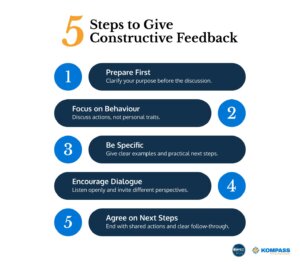
5 Steps to Give Constructive Feedback
Giving constructive feedback is rarely about finding the perfect words. A thoughtful approach makes it easier for both people to understand the issue and move towards a constructive outcome.
1. Prepare Before the Conversation
Clarify the purpose first. What outcome are you hoping this discussion will achieve? Gather specific observations while the details are still clear, and choose a setting where the other person can speak openly.
2. Focus on Behaviour, Not Personality
Instead of saying, “You aren’t committed,” try, “The report was submitted after the agreed deadline.” The second statement describes an observable action rather than making a judgement about the individual, making it easier to explore what happened without creating unnecessary defensiveness.
A simple structure keeps the discussion grounded: describe the situation, explain the observable behaviour, and discuss its impact before exploring possible improvements.
3. Be Specific and Actionable
Vague statements leave people guessing. Clear examples, practical suggestions, and agreed next steps give the recipient something concrete to work with. This approach also strengthens problem-solving skills by encouraging people to focus on practical solutions rather than assumptions.
4. Listen and Encourage Dialogue
Active listening is one of the most important interpersonal skills in the workplace and a core coaching skill. It means asking open questions and making a genuine effort to understand the other person’s viewpoint rather than waiting for an opportunity to present your own. Prompts such as, “How does that match your experience?” or “What does it look like from your side?” encourage discussion instead of defensiveness. Before responding, ask yourself what you might be missing about the other person’s experience.
5. Agree on Next Steps
Good intentions rarely lead to lasting change without clear follow-through. Agreeing on shared expectations, individual responsibilities, and an appropriate follow-up helps turn discussion into action and reduces the chance of the same issue resurfacing.
Examples of Constructive Feedback at Work
These examples show how the same principles can be adapted to common workplace situations.
| Workplace Situation | Example of Constructive Feedback |
| Missed deadline | “The deliverable came in two days after the agreed date. Can we talk through what got in the way so we can flag delays earlier next time?” |
| Team collaboration | “I’ve noticed updates often come through after decisions have already been made. It would help the team if everyone was included earlier in the process.” |
| Presentation skills | “The content was strong. Pausing for questions throughout the presentation would give the audience more time to absorb the key points.” |
| Declining performance | “Your recent work hasn’t matched your usual standard. Is there anything affecting your workload that we should discuss?” |
| Project post-mortem | “Let’s reflect on what worked well, what challenged us, and what we would approach differently next time so we continue improving as a team.” |
Project post-mortems provide a practical opportunity to learn from experience rather than assign blame. When reflection becomes part of every project, constructive feedback feels like a shared responsibility rather than a response to failure.
Giving constructive feedback is only one side of the exchange. How it is received often determines whether it leads to meaningful change.

Receiving Constructive Feedback Effectively
Receiving constructive feedback well is just as important as giving it, yet it is often overlooked.
One helpful habit is separating the value of the message from your opinion of the person delivering it. Valuable observations can still come from someone you disagree with or from someone who expresses it imperfectly.
Instead of responding immediately, acknowledge what has been shared first: “Thank you for raising that. I’d like some time to reflect before I respond.” That brief pause creates space to ask clarifying questions and consider the feedback more objectively.
An initial feeling of discomfort or defensiveness is natural. It does not automatically determine whether the feedback is fair. More balanced judgement often comes after that first emotional response has settled.
Creating a Feedback Culture
individual skill only goes so far without an environment that supports it. Organisations that encourage regular, open dialogue rather than reserving feedback for formal reviews are more likely to build trust, psychological safety, and a culture of continuous learning.
Make Feedback Part of Everyday Work
Small, regular conversations often have a greater impact than occasional formal reviews. When regular feedback becomes a normal part of daily work, it feels less like an evaluation and more like a shared commitment to helping one another succeed.
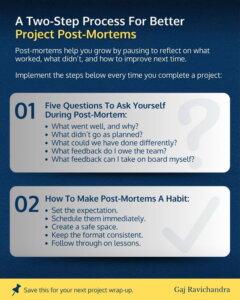
Learn Through Project Post-Mortems
Project post-mortems are most effective when they begin with the assumption that everyone acted on the best information available at the time. That simple mindset shifts attention away from blame and towards learning, creating space to recognise successes, examine challenges, and identify improvements for future projects.
As Gaj Ravichandra says, “The best teams don’t just deliver projects. They learn from them.“
When reflection becomes a consistent part of every project, improvement stops depending on isolated successes or failures. Instead, learning becomes part of how the team works together.
Constructive Feedback as a Leadership Skill
Leaders shape a culture of open dialogue more through example than instruction. How they give, receive, and respond to feedback sets the standard others are likely to follow. A leader who meets challenge with curiosity rather than defensiveness creates an environment where honest dialogue feels safe rather than risky.Developing these capabilities often requires ongoing reflection and professional coaching, particularly for leaders responsible for supporting the growth of others.
That example extends in both directions. While many leaders are comfortable giving feedback, fewer create genuine opportunities to receive it. Welcoming thoughtful challenge from the team signals that honesty is valued, encouraging people to raise concerns, share ideas, and speak openly before small issues become larger ones.
The Role of Self-Awareness in Giving and Receiving Feedback
Self-awareness underpins every aspect of constructive feedback. It helps people recognise their own assumptions, manage emotional reactions, and approach difficult discussions with greater openness. Before understanding someone else’s perspective, it often helps to examine your own.
The most valuable feedback is rarely remembered because it was perfectly delivered. It is remembered because it created greater clarity, strengthened working relationships, and encouraged meaningful improvement. Ultimately, a healthy workplace culture is measured not by how often feedback is given, but by how safe people feel speaking honestly and listening openly.