There is rarely a shortage of ambition when it comes to leadership development. Organisations invest in it, and leaders commit to it. Yet in our conversations with executives and HR leaders, a consistent theme emerges around how best to approach leadership development in different contexts.
Many organisations invest without fully distinguishing between leadership training and executive coaching. Both have value, but they serve different purposes. When the wrong approach is applied to the wrong challenge, even well-resourced efforts can fall short.
Understanding that difference is what allows leaders and organisations to choose the right path for their specific landscape.
What Is Leadership Training?
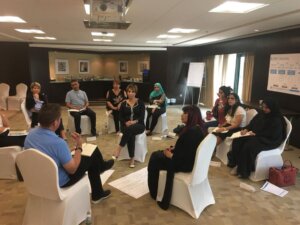
A structured learning experience designed to build capability across groups of leaders sits at the centre of leadership training. It brings together individuals at a similar stage and introduces shared frameworks, language, and practical tools that can be applied in day-to-day work.
Whether delivered through workshops or structured programmes, the aim is consistent: to develop core leadership skills and create alignment in how leadership is understood and practised across a team or organisation.
Where Leadership Training Creates Value
Leadership training is most effective when the goal is to build capability at scale or establish consistency across teams. It is particularly relevant when developing foundational leadership skills such as:
Communication and feedback
Delegation and performance management
Conflict resolution and decision-making
There is also value in the shared learning environment. Bringing leaders together creates space for peer learning, strengthens relationships, and builds a common language that continues beyond the programme itself.
It is less effective when the challenge is deeply individual. Behavioural patterns, context-specific dynamics, and how a leader responds under pressure are not easily addressed in a group setting. The most meaningful growth often happens in the space between what a leader knows and how they behave when it matters, which is where executive coaching becomes more relevant.
What Is Executive Coaching?
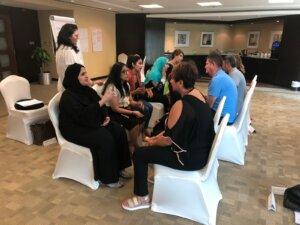
A one-to-one, confidential relationship between a coach and a leader sits at the heart of this work. It is not advisory or mentoring. Rather than offering answers, a skilled coach works through questions, helping leaders explore how they think, what they value, and where their assumptions may be shaping their decisions.
The work is grounded in what is real and present. Current challenges, ongoing relationships, and live decisions become the focus of the conversation. This is what makes executive coaching particularly effective for leaders operating in complex, high-stakes environments.
Where Executive Coaching Creates Value
It creates the greatest value when the challenge is behavioural or context-specific rather than purely skill-based. It is particularly relevant for leaders who need to:
- Deepen self-awareness and understand how they are experienced by others
- Make decisions in uncertain or high-pressure situations
- Navigate complex relationships and organisational dynamics
Over time, this often leads to more grounded decision-making, stronger relationships, and a greater ability to lead through ambiguity.
It is less suited to situations where the primary need is to build foundational skills or introduce shared frameworks across a group. In those cases, leadership training provides a more structured and scalable solution.
Leadership Training vs. Executive Coaching: Understanding The Difference
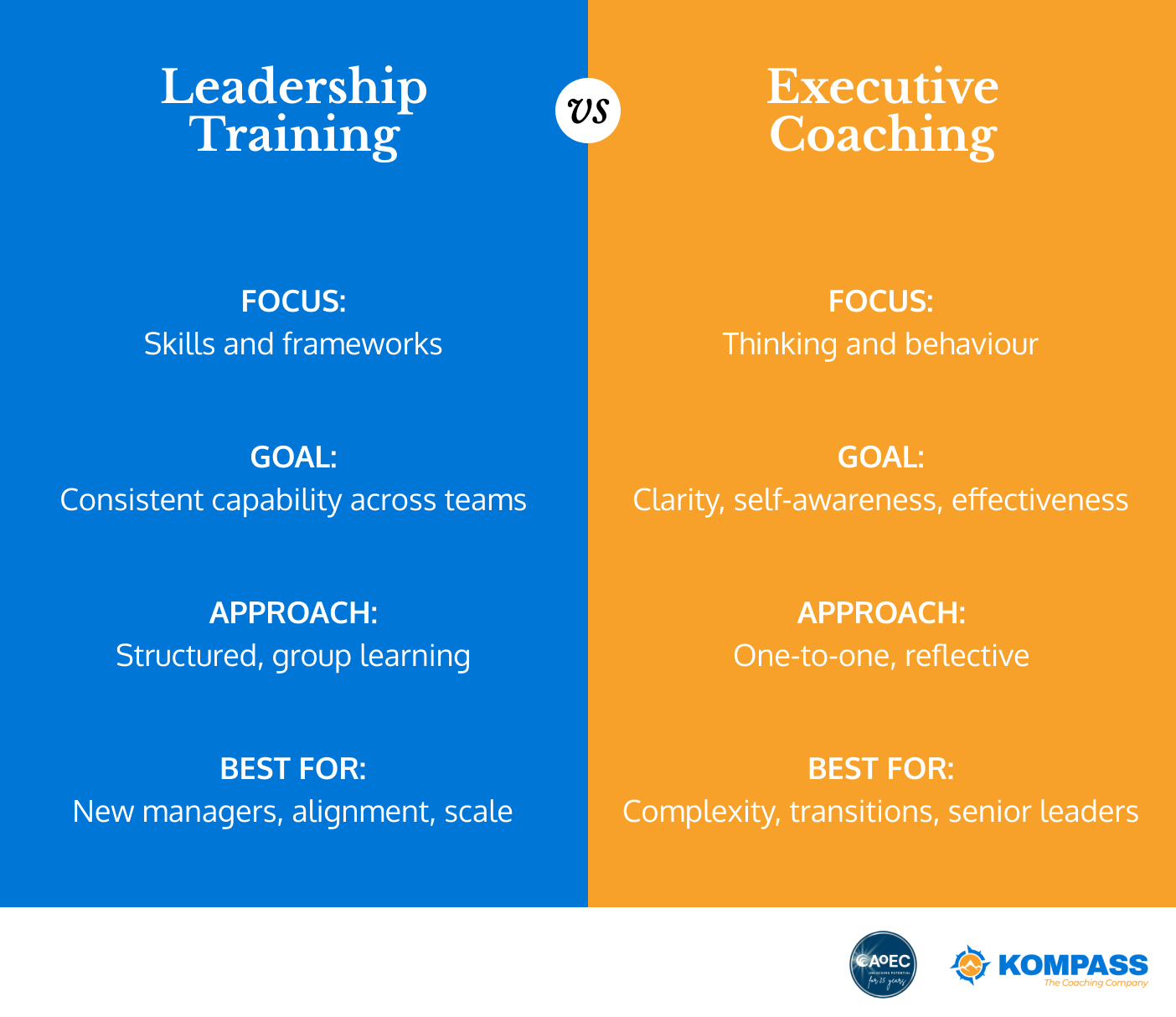
At the most fundamental level, leadership training and executive coaching differ in their unit of focus and their mechanism of change. Leadership training works at the level of knowledge and collective capability. It builds skills across a group and creates shared frameworks. Executive coaching focuses on individual insight and behavioural change, developing the kind of self-awareness and adaptive thinking that formal learning rarely reaches.
One is structured and content-led. The other is reflective and context-led. Both are legitimate paths to leadership growth, but they are not interchangeable.
Scope And Focus
Leadership training is broad by design. Its scope spans a defined set of skills or competencies, delivered to a group of people who share a common developmental need. Executive coaching is narrow by design. It is specific to one person, their situation, and what is most relevant in that moment.
Learning And Application
In training, learning typically precedes application. Participants encounter a model, practise it in a safe environment, and then return to their workplace to implement what they have absorbed. In coaching, the sequence is often reversed. Leaders bring real challenges into the conversation, explore them in depth, and the learning emerges through that exploration, applied in real time.
Depth Of Impact
The distinction between capability and capacity is important. Leadership training tends to build capability, equipping leaders with the skills to act in familiar situations. Coaching, by contrast, develops capacity, strengthening how a leader thinks so they can navigate situations that are less predictable.
When Leadership Training Is The Right Choice
This approach is most effective when the challenge is about building knowledge, creating consistency, or developing capability at scale. It provides a structured way to equip groups of leaders with a shared set of tools and approaches.
It is particularly relevant when:
- Supporting first-time managers stepping into leadership roles
- Standardising approaches to feedback, performance, or decision-making
- Creating alignment across teams through shared frameworks and language
It is also valuable when peer learning is part of the outcome, bringing leaders together to exchange perspectives and build stronger working relationships.
A useful question to consider is whether the challenge would benefit from a defined curriculum and a group learning environment. If so, leadership training is likely the right place to begin.
When Executive Coaching Is The Right Choice
This becomes most relevant when the challenge cannot be addressed by acquiring more knowledge alone, but requires a shift in how a leader thinks, relates, or makes decisions under pressure.
It is particularly valuable when:
- Stepping into a broader or more complex leadership role
- Navigating high-stakes decisions or organisational change
- Managing relationships, influence, or team dynamics at a senior level
These are not conventional skill gaps, but situations that require a different quality of thinking and reflection.
Transitions are a natural inflection point. Moving from individual contributor to manager, or from manager to executive, often demands a deeper shift in how a leader operates. In some cases, this is also where career coaching can play a role, particularly when the transition involves broader questions about direction, identity, or long-term development.
Can Leadership Training And Executive Coaching Work Together?
Leadership training and executive coaching are not in competition. At their best, they complement each other within a development journey that combines structure with reflection.
Training establishes the foundation, introducing frameworks, shared language, and core capabilities. Coaching then supports the integration of that learning into real leadership behaviour, helping leaders apply it in the complexity of day-to-day work.
When used together, this creates a more sustained form of development. Training builds capability across a group, while coaching deepens it at the individual level.
Choosing Between Leadership Training And Executive Coaching
Rather than a checklist, it can be more useful to approach this as a set of reflective prompts, questions worth sitting with before committing to a particular path.
- If the challenge you are facing is primarily about skill, about what someone knows or can do, leadership training may be the right starting point.
- If the challenge is behavioural or relational, about how someone leads, how they are experienced, or how they make decisions under pressure, executive coaching offers deeper support.
- If the challenge is systemic, affecting a team or organisation as a whole, a combined approach is often more effective.
None of these paths is inherently right or wrong. What matters is an honest assessment of what the situation actually calls for.

Leadership Development In A Global And Diverse Context
For leaders operating across the UAE and the wider MENA region, leadership does not happen in a cultural vacuum. How authority is expressed, how feedback is given, and how trust is built can vary significantly, shaping how leadership is experienced in practice.
Leadership training can sometimes overlook these differences. Frameworks designed for a broad audience do not always translate easily across cultures.
Executive coaching, with its focus on the individual and their environment, creates space to explore these nuances. It allows leaders to adapt how they lead in response to the realities around them.
In diverse environments, effective leadership development is less about applying a single model and more about understanding what the situation requires.
The Long-Term Impact Of Choosing Well
Leadership development is not a one-time intervention. It is an ongoing process shaped by the challenges a leader faces, the environment they operate in, and the quality of reflection they bring to both. The choice between leadership training and executive coaching is not fixed. It evolves as leaders grow and as the nature of the challenge changes.
What endures is the principle behind the choice. Development that is aligned with real context tends to produce growth that lasts. Development chosen for convenience, or because it is familiar, rarely does.
The question is not which approach is better. It is which one meets you where you are and supports where you are trying to go.
Key Takeaways
Choosing between leadership training and executive coaching depends on the nature of the challenge, not the popularity of the approach.
- Leadership training builds shared capability, equipping teams with common frameworks, skills, and language at scale.
- Executive coaching develops individual capacity, supporting deeper shifts in thinking, behaviour, and decision-making in complex contexts.
- The strongest outcomes often come from using both, combining structured learning with reflective practice to sustain development over time.