

Coaching is a structured process that helps individuals unlock their potential and make better decisions. It offers a clear path for growth in leadership, career, or personal development.
Not all coaches are alike. The right coach brings the skills, approach, and mindset needed to drive real change. Without these qualities, progress can stall, and opportunities may be missed.
This article outlines the 10 essential skills every effective coach should possess and provides key steps to help you select a coach who aligns with your goals and preferences.
Why Are Coaching Skills So Important for Success?
Coaching goes beyond giving advice. It is a structured, goal-oriented process where the coach’s skills are essential to achieving meaningful results.
Strong coaching skills are important because they:
- Build trust and connection through empathy and professionalism.
- Encourage deeper thinking with timely, thoughtful questions.
- Support progress by helping clients set goals and stay accountable.
- Handle challenges with confidence and emotional intelligence.
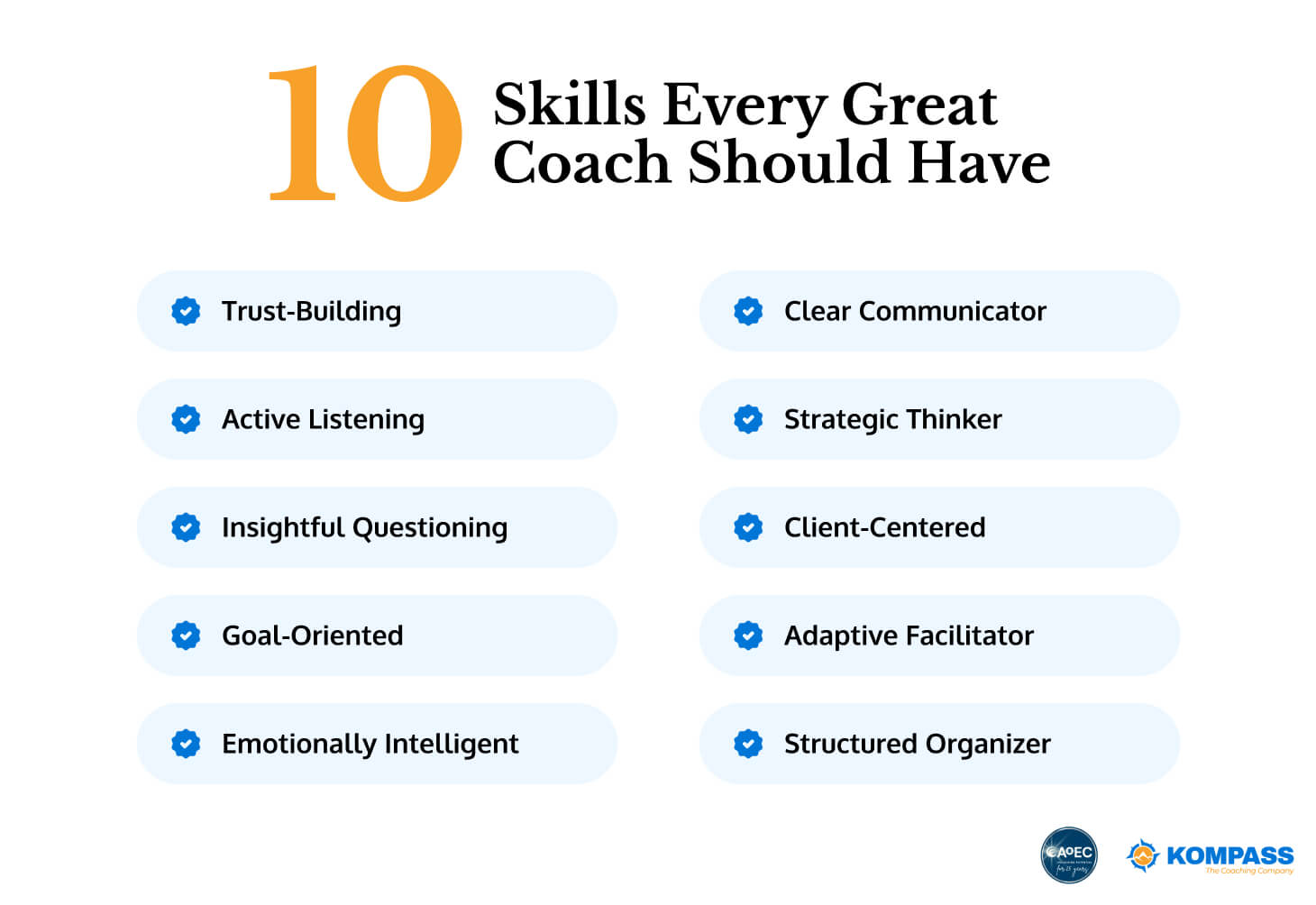
What Are the 10 Essential Skills Every Coach Should Have?
Effective coaching depends on specific skills that enable coaches to guide conversations, support personal growth, and achieve lasting results.
Whether you are a coach or seeking one, these foundational skills define coaching excellence.
1. Trust-Building
A coaching relationship begins with rapport. Trust enables clients to share thoughts, emotions, and doubts openly, forming the foundation for effective coaching.
To build rapport, effective coaches:
- Demonstrate authenticity: Being genuine and present, not overly scripted or performative.
- Create psychological safety: Clients should feel comfortable sharing without fear of judgment.
- Use verbal and non-verbal cues: Open body language, appropriate eye contact, and a supportive tone help build connection.
- Respect boundaries and confidentiality: Trust is reinforced by professionalism and ethical standards.
Building rapport is an ongoing commitment. As trust grows, clients are more willing to explore root causes, challenge limiting beliefs, and take bold steps forward.
2. Active Listening
Active listening involves understanding both what the client says and what is left unspoken.
A coach skilled in active listening will:
- Listen without interrupting or preparing the next question.
- Pay attention to tone, pace, and body language to pick up on hidden cues.
- Reflect key words or emotions to demonstrate understanding and support clarity.
- Use silence strategically to give the client time to think and process.
Active listening demonstrates respect and helps clients feel heard. It also enables coaches to identify patterns, limiting beliefs, and opportunities for deeper insight.
3. Insightful Questioning
Coaches use powerful questions to help clients uncover their own answers rather than simply offering advice.
Strong coaches ask:
- Open-ended questions that invite reflection, insight, and exploration instead of yes/no answers.
- Future-oriented questions that shift focus from problems to possibilities.
- Challenging yet respectful questions that help clients move beyond assumptions.
Examples include:
- “What’s standing between you and your goal right now?”
- “If success was guaranteed, what would you try?”
- “What beliefs are influencing this decision?”
Powerful questions encourage clients to reframe situations, gain insight, and take ownership of their development.
4. Goal-Oriented
Effective coaches help clients set clear, achievable goals and hold them accountable for progress.
A great coach supports clients in:
- Clarifying what they want to achieve and why it is important.
- Breaking goals into smaller, actionable steps with realistic timelines.
- Tracking progress and revisiting goals to adapt as needed.
- Celebrating achievements, even small ones, to maintain momentum and motivation. Stability helps clients stay committed, identify obstacles early, and build consistent habits for long-term change. Coaches always provide this with support, not pressure.

5. Emotionally Intelligent
Coaching conversations often involve fear, doubt, excitement, or frustration. Coaches need strong emotional intelligence (EQ) to navigate these moments with sensitivity and clarity.
Empathetic coaches:
- Recognize underlying emotions, even when clients do not express them directly.
- Validate emotional experiences without trying to “fix” them.
- Regulate their own emotional responses and remain grounded, even during intense sessions.
- Adapt their coaching approach to match the emotional tone of the session, providing space when needed or energy when momentum is required.
High EQ enables coaches to connect on a human level, build trust, and enhance their impact. Empathy involves attunement, presence, and a deeper understanding of the client’s experience.
6. Clear Communicator
Coaching is a conversation-based process, and the quality of communication directly affects its impact. Effective coaches listen well and express themselves clearly, tactfully, and purposefully. They also provide feedback that is motivating rather than discouraging.
Effective coaching communication involves:
- Clear articulation: Using concise, jargon-free language.
- Tone awareness: Communicating with warmth, curiosity, and professionalism.
- Adaptability: Adjusting communication style to suit the client’s preferences.
- Constructive feedback: Offering insights that are specific, actionable, and growth-focused.
Constructive feedback helps clients identify blind spots and build on their progress.
7. Strategic Thinker
While coaching is client-led, it also requires strategic guidance. Coaches help clients identify patterns, make connections, and explore solutions to complex challenges without taking a directive or advisory role.
Coaches apply strategic thinking by:
- Helping clients clarify problems and distinguish between symptoms and root causes.
- Guiding them to examine different perspectives and explore possible outcomes.
- Using coaching models or frameworks (such as GROW or Wheel of Life) when appropriate to provide structure and support exploration.
- Aligning short-term actions with long-term vision to ensure decisions support a larger purpose.
A strategic mindset keeps coaching conversations focused and moving toward meaningful outcomes.
8. Client-Centered
A skilled coach maintains a non-judgmental stance, allowing the client to lead while providing support, structure, and appropriate challenge.
Key characteristics of a client-led, non-judgmental approach include:
- Assuming the client is resourceful and capable, so the coach does not need to “fix” them.
- Allowing clients to choose their own goals and direction rather than imposing an agenda.
- Creating a safe, open space for all topics, including uncertainty, doubt, or mistakes.
- Avoiding personal bias or assumptions, the coach remains curious rather than conclusive.
This approach reinforces that answers originate from the client, not the coach.
9. Adaptive Facilitator
Every client is unique, and effective coaches adjust their style, tools, and pacing to meet individual needs. Flexibility keeps coaching responsive, while creativity makes it engaging.
Coaches demonstrate flexibility by:
- Adapting their approach in real time based on the client’s mood, energy, or breakthroughs.
- Using creative tools or techniques such as metaphors, role play, journaling, visualization, and mind maps.
- Shifting session structure as needed, whether focusing on deeper issues or maintaining a practical approach.
Creativity is especially helpful when clients feel stuck or disconnected. It opens new avenues for exploration and can spark energy and insight in unexpected ways.
10. Structured Organizer
A great coach balances flexibility with structure, ensuring each session remains focused and productive while allowing for meaningful exploration.
Effective time management in coaching includes:
- Starting with clear intentions: Reviewing goals or setting a session focus at the outset.
- Pacing the session effectively: Allowing time for reflection, discussion, and action planning.
- Knowing when to redirect: Gently guiding the client back if the conversation strays from the intended focus.
- Closing with clarity: Summarizing key insights and confirming next steps.
Respecting time demonstrates professionalism and builds trust. It also ensures clients leave each session with a sense of completion and direction.

How to Choose the Right Coach
With so many coaches offering services across various niches and platforms, choosing the right one can feel overwhelming. However, finding the right coach is essential for your growth. The coach should have the right skills, presence, and style that match your goals and personality.
Here’s a step-by-step approach to help you make a confident and informed decision:
1. Book an Introductory Consultation
Most professional coaches offer a free or low-cost discovery call. This is your opportunity to learn about the coach, understand their approach, and determine if there is a good fit.
During the consultation:
- Ask about their coaching style and approach. Do they provide structure, or is their method more open and intuitive?
- Share your goals or challenges and observe their response. Do they listen attentively or immediately offer solutions?
- Clarify logistics by asking about session frequency, duration, format (virtual or in-person), and pricing.
- Notice their energy. Do you feel comfortable, respected, and understood during the interaction?
Use this opportunity to assess compatibility and communication style.
2. Check Testimonials and Reviews
Reviews and client feedback provide valuable insight into the coach’s effectiveness, professionalism, and impact.
When reviewing testimonials:
- Look for tangible outcomes. Do clients mention specific changes or results?
- Check for consistency. Are positive themes, such as being supportive, insightful, or empowering, repeated across different reviews?
- Explore multiple sources. Do not rely solely on testimonials from the coach’s website; check platforms such as LinkedIn or Google Reviews when possible.
A pattern of satisfied clients, especially those with goals similar to yours, is a strong indicator of a reliable coach.
3. Consider a Trial Session
Some coaches offer a paid trial session, often at a discounted rate. This allows you to experience the coaching process before committing to a longer engagement.
During a trial session:
- Pay attention to how the session is structured. Is there clarity regarding goals, time management, and outcomes?
- Assess how you feel. Do you feel heard, challenged, and supported?
- Observe the coach’s skill level. Do they ask thoughtful questions and help you consider new perspectives?
A good trial session should provide greater clarity, even if it is only a starting point. It also helps you assess the coach’s ability to create a productive, respectful environment.
4. Trust Your Intuition
Credentials, experience, and reviews are important, but they’re not the whole picture. Your own instincts and comfort level matter just as much.
Ask yourself:
- Do I feel safe and supported by this person?
- Do I believe they can challenge me constructively?
- Do their energy and communication style resonate with you?
Coaching is a personal process. If something feels off, it is acceptable to continue your search. Conversely, a strong connection often indicates you have found the right match.

Frequently Asked Questions
Do I need a coach with industry experience?
Not necessarily. A coach doesn’t need to be an expert in your industry to be effective. Their role is to help you think clearly, make decisions, and take action, not to offer technical advice. However, if you’re looking for guidance in a highly specialized field, some familiarity with the industry may be beneficial.
What’s the difference between a mentor and a coach?
A mentor shares their experience, gives advice, and often acts as a role model in a specific field. A coach, on the other hand, focuses on asking questions, encouraging reflection, and helping you find your own solutions.
How long does a typical coaching relationship last?
It varies. Many coaching engagements last 3 to 6 months, depending on the goals. Some clients work with a coach for a shorter period to address a specific challenge, while others continue for a year or more for ongoing support and development.
How do I know if coaching is working for me?
You’ll know coaching is working when you feel clearer and confident about your direction, notice improvements in your mindset, behavior, or decision-making, and see tangible progress in the areas you’re focusing on. Regular check-ins with your coach can help track this progress.
Is virtual coaching as effective as in-person sessions?
Yes. Virtual coaching is just as effective for most people. It offers flexibility, saves you travel time, and lets you work with coaches outside your local area. What matters most is the quality of the coaching relationship, not the location.