In today’s workplace, standing still is rarely an option. Skills evolve. Expectations rise. Roles shift quickly. What keeps you relevant is not what you learned years ago, but your willingness to keep growing.
Whether you are building your career, leading a team, or shaping strategy at senior level, continuing professional development helps you stay capable, confident, and clear about your direction. It is not about collecting certificates. It is about strengthening how you think, lead, and contribute.
In our work with professionals across industries, we see how intentional development transforms performance. When you commit to learning with purpose, you do not just gain skills. You gain insight, resilience, and the confidence to navigate change.
Let us explore what CPD really means, why it matters, and how you can build a development plan that works for you.
What Is Continuing Professional Development
Continuing professional development is the ongoing, intentional process of strengthening your knowledge, skills, and behaviours throughout your working life. It is how you stay capable, adaptable, and confident as expectations evolve.
Rather than a single course or qualification, continuing professional development is a structured commitment to professional growth.
It can include:
- Formal learning, such as accredited qualifications, leadership programmes, and professional certifications
- Social learning, through mentoring, supervision, and peer dialogue
- Self-directed learning, including reading, reflection, podcasts, and online study
- Workplace-based learning, such as stretch assignments, new responsibilities, and real-world challenges
Each form plays a different role. Together, they build capability over time.
Unlike traditional training, CPD is not a one-off event. It is a mindset and a habit.
To see the difference clearly:
| Traditional Training | Continuing Professional Development |
| One-time course | Ongoing development journey |
| Focus on knowledge | Focus on behaviour and capability |
| Often separate from daily work | Integrated into real work challenges |
| Short-term motivation | Long-term professional growth |
If you have ever left an inspiring workshop only to return to old habits weeks later, you have seen the limits of isolated training. Motivation fades when learning is not reinforced.
Continuing professional development makes growth sustainable because it is continuous, reflective, and applied in real situations. Over time, this consistent practice shapes not just what you know, but how you think, lead, and contribute.
Why Continuing Professional Development Matters
Work is evolving quickly. Technology advances. Roles expand. Expectations shift. What keeps you relevant is not what you learned years ago, but your ability to keep developing.
Continuing professional development helps you adapt with confidence. It strengthens not just your knowledge, but your capacity to navigate change with clarity and purpose.
Staying Relevant in a Changing Workplace
Global teams, digital tools, and new leadership demands mean yesterday’s skills are rarely enough. Continuing professional development ensures your capabilities grow alongside your responsibilities.
Relevance is not about knowing everything. It is about staying curious, adaptable, and willing to learn.
Building Confidence Through Competence
Confidence grows from capability. When you invest in your development, you speak with greater clarity, make decisions with more conviction, and manage complexity more effectively.
As your competence deepens, your confidence strengthens naturally. Growth in skill leads to growth in self-belief. Yet confidence without reflection can limit impact. Leadership coach Gaj Ravichandra has emphasised that leadership maturity lies in understanding impact, not just intention. Continuing professional development sharpens this awareness, ensuring your confidence is grounded not only in expertise, but in responsibility.
Finding Direction and Purpose
Working hard does not always mean moving forward. Without direction, effort can feel draining.
When your development aligns with your long-term goals, your work gains meaning. Continuing professional development turns activity into progress and routine into purposeful growth.
The Benefits of Continuing Professional Development
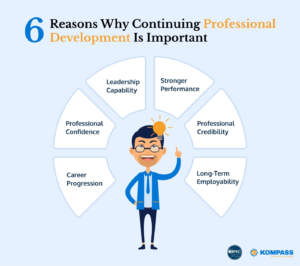
Continuing professional development creates value far beyond gaining new information. It shapes how you think, lead, and contribute over time.
1. Clearer Career Progression
When you strengthen your capabilities intentionally, you increase your professional mobility. You become prepared for broader responsibilities rather than waiting for opportunity to appear.
Growth becomes strategic rather than accidental.
2. Deeper Confidence and Self-Awareness
Reflection builds insight into your strengths and blind spots. As your competence grows, so does your confidence. You make decisions with greater clarity and communicate with more authority.
Confidence grounded in capability is steady and sustainable.
3. Stronger Leadership and People Skills
Leadership is not developed through theory alone. It grows through feedback, coaching, and applied practice. Communication improves. Emotional intelligence deepens. You respond to complexity with greater composure.
These behavioural shifts create lasting influence.
4. Greater Organisational Contribution
When learning becomes part of how you work, performance improves. Collaboration strengthens. Problems are solved more creatively.
Continuing professional development does not only benefit you. It strengthens the teams and systems around you.
5. Enhanced Professional Credibility
Commitment to ongoing development signals maturity and ethical responsibility. Colleagues and stakeholders trust professionals who stay informed and reflective.
Credibility grows when others see your commitment to standards.
6. Long-Term Employability
Industries evolve. Roles transform. Skills expire.
Professionals who invest consistently in their development remain adaptable and resilient. They are prepared not just for their current role, but for what comes next.
Those who commit to continuing professional development are not simply more skilled. They are more adaptable, self-aware, and future-ready.
Types of Continuing Professional Development
Effective continuing professional development combines multiple forms of learning. Sustainable growth happens when structured study, reflection, collaboration, and real-world application work together.
Formal Learning
- Accredited qualifications and diplomas
- Leadership and coaching programmes
- Professional certifications
These structured pathways provide clear frameworks, recognised standards, and professional credibility. They build strong foundations for capability and progression.
Social and Collaborative Learning
- Mentoring relationships
- Peer learning groups
- Team coaching and supervision
Learning deepens through dialogue. Conversation challenges assumptions, sharpens thinking, and builds insight that individual study alone cannot provide.
Self-Directed Learning
- Professional reading and research
- Podcasts and webinars
- Reflective journalling and personal learning goals
Small, consistent habits compound over time. Self-directed learning strengthens accountability and develops learning agility.
Workplace-Embedded Learning
- Stretch assignments
- Cross-functional projects
- Leading new initiatives
Real work is often the richest classroom. Applying new skills in complex situations builds confidence, resilience, and practical expertise.
CPD Across Career Stages
Continuing professional development shifts as your responsibilities expand. What strengthens performance early in your career differs from what sustains impact at senior levels.
Early Career
At this stage, development builds foundations:
- Core technical capability
- Communication skills
- Mentorship and regular feedback
The priority is building competence and confidence. Structured guidance accelerates learning and reduces avoidable mistakes.
Mid-Career and People Leaders
As responsibility increases, development broadens:
- Leadership capability
- Strategic thinking
- Managing people and performance
- Coaching skills
This is often the point where career coaching helps clarify direction, align strengths with opportunity, and prepare for larger roles.
Senior Leaders and Executives
At senior levels, development becomes more systemic and reflective:
- Systems thinking
- Organisational culture and dynamics
- Executive presence
- Reflective leadership practice
Here, executive coaching and structured reflection often drive deeper behavioural and cultural impact.
Coaches, HR, and Development Professionals
For those responsible for developing others, standards matter:
- Accredited training
- Ethical practice
- Supervision and continuous skills refinement
Ongoing development safeguards quality, credibility, and professional integrity.
How to Create Your Own CPD Plan
A strong CPD plan does not need to be complex. It needs clarity and commitment.
Step 1: Clarify Your Direction
Ask yourself:
- What skills will I need in the next 12 to 24 months?
- Where do I feel least confident?
- What feedback do I consistently receive?
Intentional development starts with honest reflection.
Step 2: Choose the Right Learning Mix
Blend formal learning with reflection, coaching, and real workplace challenges. Select formats that match your learning style, energy, and schedule.
Balance matters more than volume.
Step 3: Schedule It Intentionally
Block time for development. If it is not protected in your calendar, it rarely happens.
Treat development time as seriously as operational work.
Step 4: Reflect and Apply
After each learning activity, ask:
- What has shifted in how I think or behave?
- What will I do differently this month?
Reflection is what turns information into behavioural change.
Common CPD Mistakes to Avoid
Even committed professionals can limit the impact of their development through subtle but costly missteps.
- Treating CPD as a tick-box exercise reduces learning to compliance rather than capability-building.
- Choosing courses without clear goals creates activity without measurable progress.
- Consuming content without applying it turns insight into passive knowledge instead of behavioural change.
- Trying to do too much at once fragments attention and weakens retention.
Consistency beats intensity. Sustainable professional growth is built through focused, repeated action over time.
Building a Culture of CPD in Organisations
When learning is embedded into everyday work rather than treated as a one-off initiative, organisations see sustained performance benefits, including:
Higher engagement
Employees invest more when development is visible, supported, and consistently reinforced by leadership. Growth feels possible rather than theoretical.
Stronger leadership pipelines
Future leaders are prepared intentionally through structured development rather than identified reactively when vacancies arise. This reduces risk and improves succession readiness.
Better collaboration
Shared learning experiences strengthen trust, alignment, and cross-functional understanding. Teams communicate with greater clarity and mutual respect.
Faster adaptation to change
Continuous learning builds organisational agility. When development is normalised, people respond to change with curiosity rather than resistance.
Embedding CPD into organisational culture requires deliberate systems, not good intentions alone. Practical enablers include:
- Regular coaching conversations reinforce reflection, strengthen accountability, and ensure behavioural follow-through.
- Peer learning circles create structured dialogue that deepens insight and builds shared responsibility for growth.
- Leadership development pathways provide clear progression frameworks that support direction, transparency, and long-term capability building.
- Learning budgets aligned to strategy signal that development is not optional but integral to organisational priorities.
When CPD is normalised, growth becomes inclusive rather than selective. Development shifts from being an occasional initiative to becoming a shared organisational standard embedded in daily practice.
Continuing Professional Development for Lifelong Growth
Continuing professional development is not simply about credentials. It reflects a mindset grounded in curiosity, courage, and continuous improvement.
The professionals who sustain impact over time are rarely those who began most qualified. They are the ones who keep learning, reflecting, and adapting as expectations evolve. In our work with leaders and organisations, we consistently see that long-term success belongs to those who take ownership of their development.
You do not need dramatic reinvention to grow. You need consistent intention.
What capability will you commit to strengthening next?