Have you ever worked under a leader who made you feel truly seen, challenged, and inspired? One who didn’t just manage tasks but created an environment where you could do your best work?
Too often, organisations confuse authority with influence, believing leadership comes from a title rather than behaviour. In reality, the characteristics of a good leader, including trustworthiness, empathy, and clear communication, are what make people follow and engage with their leaders.
Whether you’re guiding a small team in Dubai, managing across the GCC, or leading a global organisation, certain traits consistently define exceptional leaders. In this article, we explore 12 essential qualities of a good leader and how you can start developing them yourself.
Why Leadership Qualities Are Important
Leadership Drives Performance
The qualities of a good leader directly shape organisational success. Research shows that perceptions of leadership effectiveness account for a significant part of employee satisfaction, trust, and engagement, helping teams perform better and work together more smoothly.
Navigates Complexity in Multicultural Teams
Leaders with key qualities can manage diverse communication styles, hierarchies, and expectations. This keeps multicultural teams in UAE and GCC aligned and productive. By understanding cultural nuances, they foster inclusion, trust, and stronger collaboration across teams.
Builds Trust and Engagement
Leaders who demonstrate ethics and integrity, along with fairness and clear communication, build trust that drives engagement, collaboration, and team performance. These core characteristics of a good leader inspire confidence and motivate teams to achieve their best.
Creates Positive Organizational Culture
Leaders with the right traits set standards for behavior and accountability. They inspire values and norms that shape a strong, high-performing culture. By modeling these behaviors, they encourage teams to adopt the same standards, boosting engagement and cohesion.
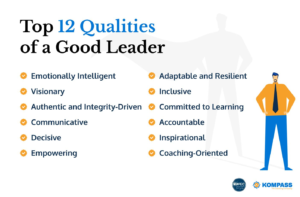
12 Characteristics of a Good Leader You Can Develop
These traits of a good leader are not fixed personality traits. They are behaviours and mindsets that develop through experience, self-awareness, and intention.
1. Emotionally Intelligent
Emotional intelligence is the ability to recognise and manage your own emotions while understanding the feelings of others. Leaders with high EI navigate conflicts calmly, maintain composure under pressure, and foster trust. Studies show EI consistently predicts a leader’s ability to inspire, guide, and support their teams. By creating psychological safety, they help teams stay motivated, engaged, and resilient.
A useful way to practice this is to pause before reacting to feedback and check in with team members, especially in multicultural UAE/GCC teams.
2. Visionary

Great leaders see beyond day-to-day tasks and connect team efforts to long-term goals. They provide direction that inspires purpose and aligns work with organisational priorities. This clarity helps teams understand how their contributions matter in the bigger picture.
One way to keep everyone aligned is to share short quarterly updates linking team priorities to organisational objectives.
3. Authentic and Integrity-Driven
Authentic leaders are consistent, honest, and true to their values. They admit mistakes, show vulnerability, and act with integrity in all situations. This builds trust and credibility with their teams, particularly in cultures where relationships matter.
A good practice is to be transparent in your decisions and acknowledge your limitations to strengthen credibility.
4. Communicative

Effective leaders communicate clearly and listen actively. They adapt their style to different audiences and cultural contexts, ensuring messages are understood. Strong communication creates clarity, engagement, and inclusion across teams.
A helpful step is to ask clarifying questions, summarise key points, and ensure quieter voices are heard in meetings.
5. Decisive
Leaders make timely decisions even when information is incomplete. They evaluate input, consult stakeholders, and act confidently. Taking responsibility for outcomes and learning from mistakes strengthens team trust.
A practical approach is to gather input quickly, commit to action, and review results to improve future decisions.
6. Empowering
Leadership is about trust, not control. Empowering leaders delegate thoughtfully, provide support, and allow autonomy for growth. This approach builds capability and engagement, multiplying a leader’s impact.
A simple method is to assign meaningful tasks, provide guidance without micromanaging, and encourage ownership.
7. Adaptable and Resilient
Change is constant, and resilient leaders embrace it. They recover from setbacks calmly and maintain optimism under pressure.
In the words of Gaj Ravichandra, co‑founder of Kompass Consultancy, he and his partner Leila Rezaiguia attribute their 11+ years of entrepreneurship to a “never give up” mindset, demonstrating how resilience and persistence in leadership sustain long-term growth and impact.
One way to strengthen this is to treat failures as learning opportunities and maintain composure during uncertainty.
8. Inclusive
Inclusive leaders seek diverse perspectives and make everyone feel valued. They understand and respect cultural differences, particularly in global and GCC teams. This fosters collaboration, trust, and innovation across the organisation.
A helpful action is to rotate meeting facilitation, invite structured input, and adapt communication to diverse working styles.
9. Committed to Learning
Effective leaders remain curious and invest in personal development. They seek feedback, stay informed, and encourage a learning culture that supports long-term performance. This commitment, supported by ongoing learning and career growth support, keeps teams agile and ready to face new challenges.
A practical step is to reflect regularly, attend workshops, or engage in coaching to strengthen leadership skills.
10. Accountable
Leaders who take accountability set clear expectations and follow through consistently. They make fair decisions about team members by balancing loyalty with competence.
Gaj Ravichandra highlights that keeping someone solely because of tenure can create misalignment, while offering development opportunities allows individuals to contribute meaningfully and grow.
A useful way is to focus on lessons learned after setbacks and create opportunities that reward both loyalty and capability.
11. Inspirational
Inspirational leaders connect work to meaningful outcomes and purpose. They celebrate achievements, recognise effort, and maintain optimism during challenges. This motivates teams to give their best and remain engaged.
A simple step is to highlight impact, celebrate milestones, and maintain a positive outlook during challenges.
12. Coaching-Oriented

A coaching mindset guides rather than directs, helping others find solutions and grow. Leaders who invest in development create stronger, capable teams. This approach inspires ownership, confidence, and long-term growth.
A practical way to strengthen this skill is by asking thought-provoking questions, assigning stretch opportunities, and holding regular coaching conversations through our Coaching Skills Certificate programme.
How to Apply Leadership Qualities in UAE and GCC Teams
Leading teams in the UAE and GCC comes with unique challenges. Multicultural workplaces have different communication styles, approaches to hierarchy, and feedback expectations. Strong leaders adjust their skills to fit this environment, building trust, engagement, and high performance.
Some ways to lead effectively in GCC teams include:
Adapt Communication
Adjust how you speak and share information to suit different cultural backgrounds and professional styles. Clear, respectful communication is key.
Use Emotional Intelligence
Notice your team’s feelings, manage your own reactions, and respond with empathy to build trust and motivation.
Foster Inclusion
Give everyone a chance to speak, rotate meeting roles, and encourage input from all team members.
Apply a Coaching Mindset
Guide problem-solving and development by asking thoughtful questions rather than just giving instructions.
These approaches help teams work well together and make leaders more effective. For structured support, leadership coaching or team development programs designed for UAE and GCC teams can be very helpful.
How to Develop Strong Leadership Qualities
Leadership growth requires consistent action and reflection. Engaging in structured leadership coaching can help you turn insights into habits that inspire trust, engagement, and results.
| Step | Action | Why It Matters |
| Self-Awareness | Recognise your strengths and areas for improvement, and seek feedback from peers or team members. | Understanding yourself is the foundation of effective leadership. |
| Set Measurable Goals | Focus on one or two qualities, create actionable steps, and monitor your progress. | Provides a clear roadmap for steady leadership development. |
| Seek Coaching Support | Work with our structured leadership coaching programs. | Coaching translates insights into sustainable habits that drive team trust, engagement, and results. |
Key Leadership Qualities for Lasting Impact
Leadership is not a destination; it is a continuous process of learning and growth. The qualities of a good leader outlined here offer a practical framework for leading with confidence, empathy, and integrity across cultures and contexts.
By cultivating these traits and embracing the characteristics of a good leader, you are not only improving team performance but also creating environments where people feel trusted, valued, and inspired to do their best work. Contact us today to explore how we can help you with leadership coaching, team development programmes, and structured learning services.